

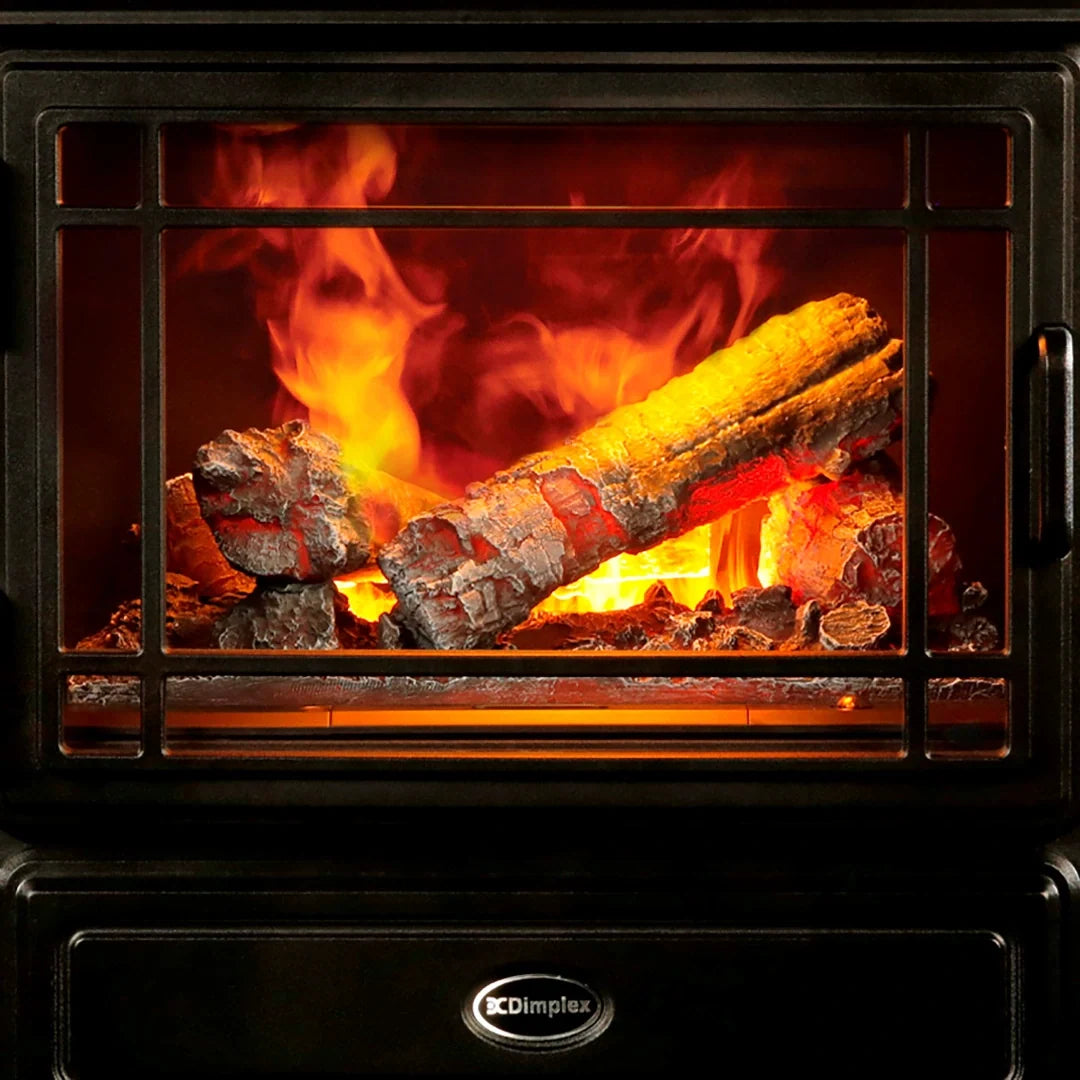
In the Optimyst vs Optiflame debate, Optimyst usually wins on pure realism, because its flames are made from real water vapour that moves and drifts like smoke and fire. Optiflame is the easier technology to live with: there's no water to top up, it comes in far more designs, and on the newest media wall fires you can even change the flame colour. Which looks "best" depends on how close you sit, how dark the room gets and how much upkeep you're happy with.
How Optiflame works
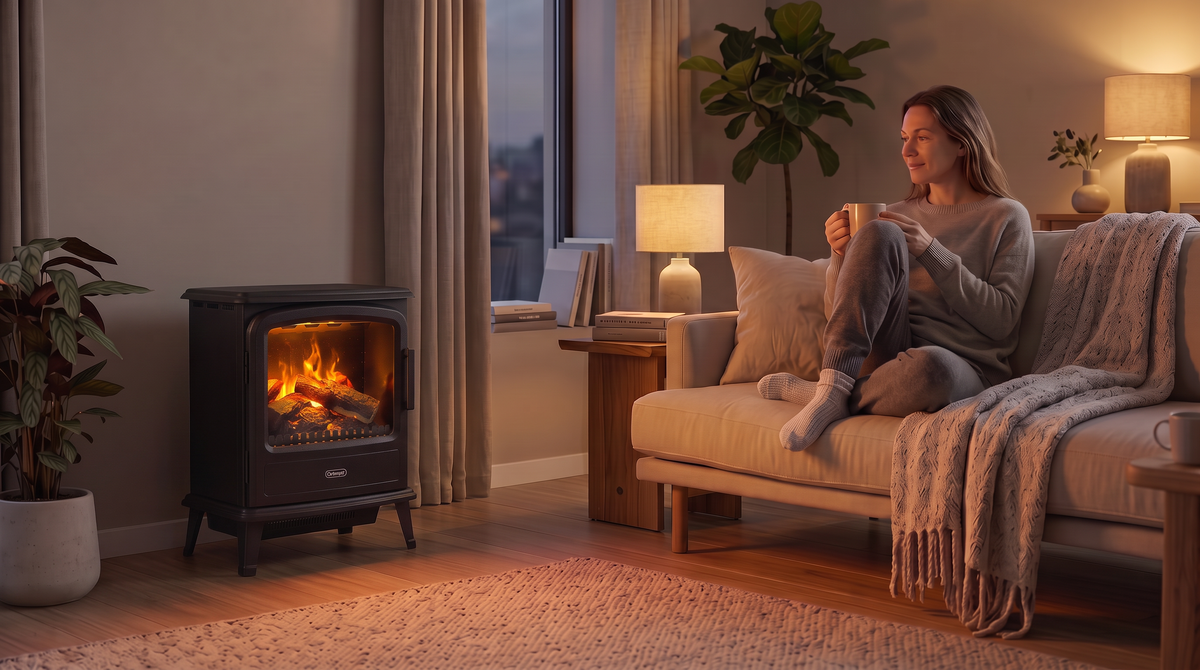
Optiflame is Dimplex's light-based flame effect. LED lighting creates moving flames above a log bed, so the fire needs nothing more than power from the socket. Because there's no water involved, Optiflame turns up across the whole range, from stoves to inset fires and wall-mounted fires.
There are a few versions worth knowing about:
- Standard Optiflame on stoves like the Tango Optiflame Electric Stove, with a front view and one flame speed.
- Three-sided Optiflame on the Oakridge, which has a wider glow you can see from three sides plus three flame speeds.
- Optiflame XHD, used on inset fires such as the Helmsdale Optiflame Inset Electric Fire - Brass.
- Colour-change Optiflame on the Sense 60 Optiflame Media Wall Fire, with 13 flame colours, 7 ambient themes, three flame speeds and a choice of log or tumbled glass fuel bed.
How Optimyst works
Optimyst creates its flame effect from a fine water vapour lit by LEDs. The mist rises through the log bed and catches the light, so instead of a flat image you get a three-dimensional, smoke-free "fire" that genuinely flickers and drifts. Stand to one side and the effect still has depth, which is something light-only effects find harder to match.
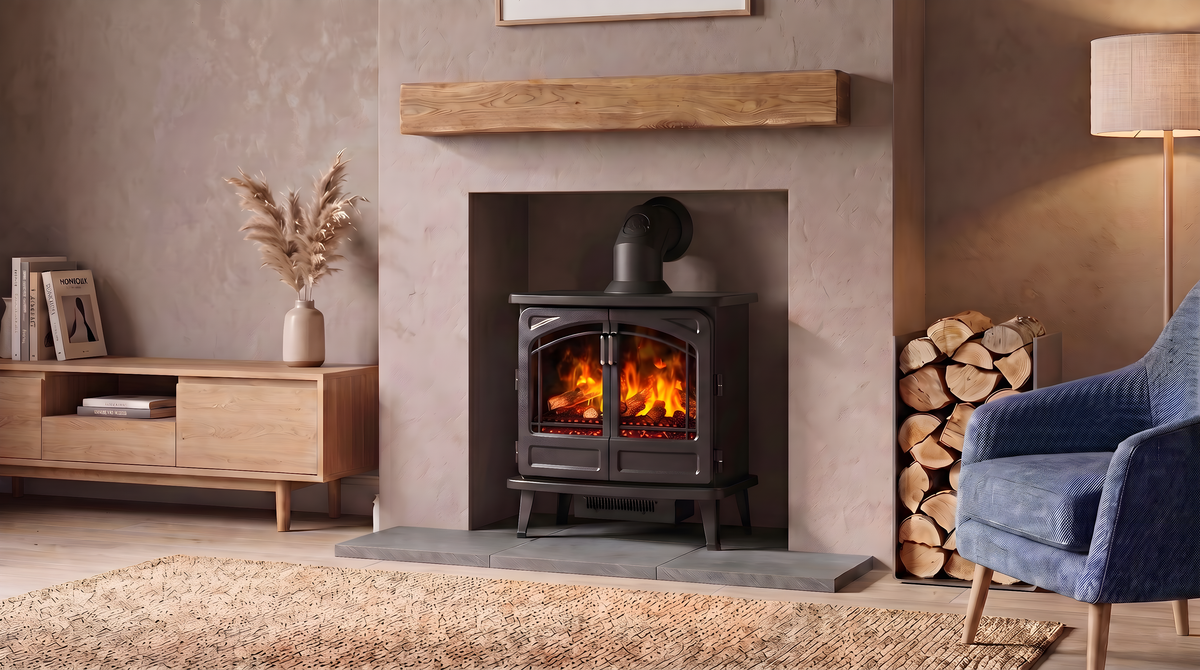
All Optimyst stoves use a water tank that you refill through the opening door. Models such as the Bermondsey Optimyst Electric Stove add LED-enhanced flames for extra depth and realism, while the Dimplex Grand Noir Optimyst Electric Stove brings the effect to a classic black stove body. Dimplex even uses Optimyst in a different way on the Optimyst 3-in-1 Baseboard Heater, which pairs the flame effect with heating and a humidifying mist from a 1.4 litre tank.
Side by side: which looks more like a real fire?
| Optimyst | Optiflame | |
|---|---|---|
| How the flames are made | Water vapour lit by LEDs | LED lighting over a log bed |
| Depth up close | Very convincing, 3D movement | Good, more of a projected look |
| Viewing from an angle | Holds its depth well | Best head-on, or choose a 3-sided model |
| Upkeep | Refill the water tank | None beyond dusting |
| Flame colours | Natural flame look | Up to 13 colours on Sense models |
| Product types | Stoves and a baseboard heater | Stoves, inset fires, suites, wall and media wall fires |
In a dim living room on a winter evening, most people find Optimyst the more convincing of the two, especially from a sofa a couple of metres away. In a bright, sunny room or a modern scheme where you want a clean linear fire on the wall, Optiflame is often the better fit, simply because that's where its designs are.
Living with each one day to day
Water and maintenance
Optimyst asks a little more of you. You'll need to check the tank and top it up, and it's worth following the manufacturer's instructions on the type of water to use and how often to clean the parts that handle it. Leave enough space around the stove for the door to open fully. Optiflame is essentially plug in and forget.
Heat and controls
On the heating side, there's no real difference. Optimyst stoves like the Fortrose Optimyst Electric Stove and Optiflame stoves like the Tango both use a 2kW fan heater with 1000W and 2000W settings, a thermostat and a flame-only mode. At the Ofgem price cap for 1 October to 31 December 2026, electricity averages 26.32p per kWh, so full heat costs 2kW × 1 hour × 26.32p = 52.6p an hour, and the 1kW setting about 26.3p. The cap changes each quarter.
Which should you choose?
- Go for Optimyst if realism is your top priority, you'll sit fairly close to the fire and you don't mind a quick tank top-up.
- Go for Optiflame if you want zero upkeep, a wall-mounted or inset fire, a three-sided view, or the option to change flame colour to suit the mood.
If you can, think about where you'll actually watch the flames from. Head-on in a cosy snug? Either works beautifully. Viewing from across an open-plan space or from several angles? Optimyst's depth or the Oakridge's three-sided view will look more natural.
The verdict
For the most lifelike flames on a stove, Optimyst has the edge. For flexibility, variety and no maintenance, Optiflame is hard to beat. Compare both side by side across the Dimplex range at shopdimplex.com, where delivery to the UK mainland is free.

Leave a comment
This site is protected by hCaptcha and the hCaptcha Privacy Policy and Terms of Service apply.